
Why Interiors Shouldn’t Be an Afterthought
People rarely question spending money on construction, yet interiors are still often treated as optional. In an era of Pinterest, Instagram and AI-generated imagery, it’s easy to mistake a beautiful image for a resolved space. But interiors shape far more than appearance — they influence atmosphere, behaviour, comfort and the lived experience of architecture itself.
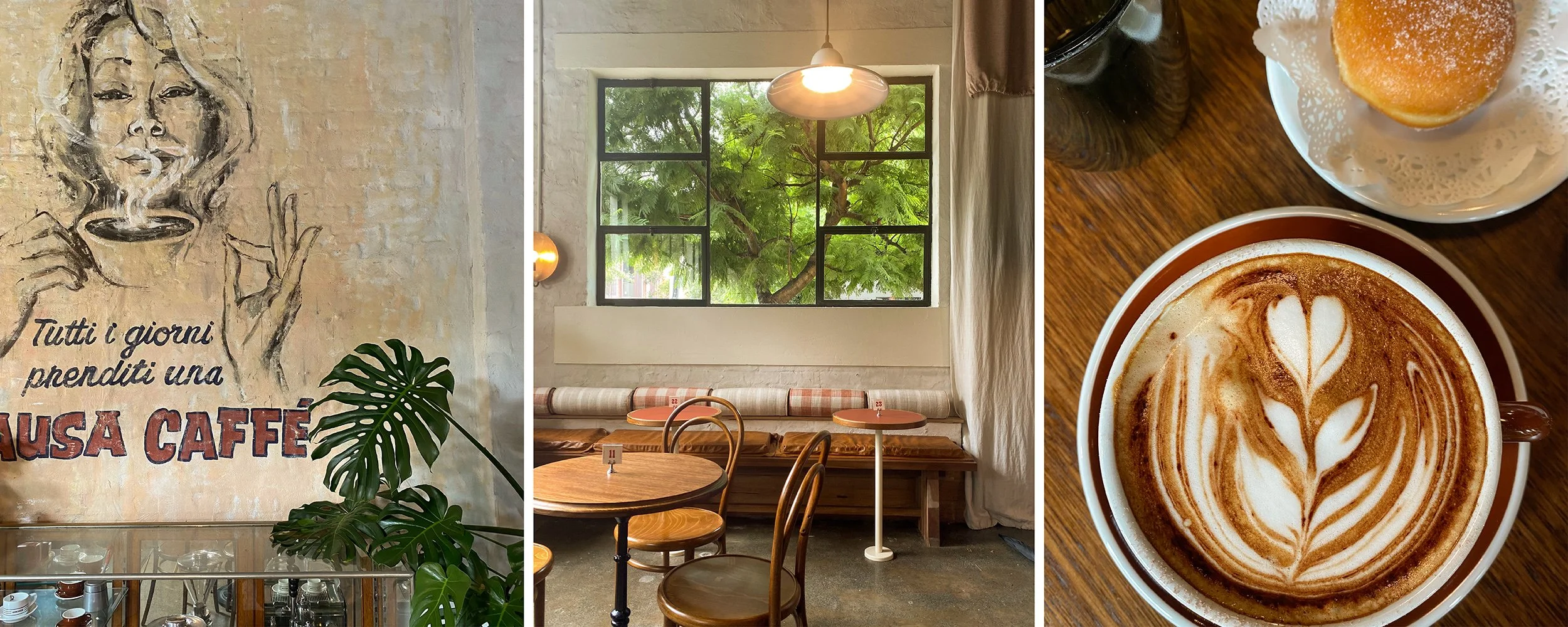
Genovese Coffee House, Alexandria, Sydney
I recently watched a reel where someone confidently claimed that AI had effectively killed interior design. Yet at the same time, I continue seeing beautifully constructed projects that still feel incomplete once people begin living in them.
It’s something I’ve noticed for years on Grand Designs — enormous budgets poured into architecture and construction, only for the furnishing and interiors to become rushed once the budget runs out.
Construction builds the shell. Interiors shape the lived experience.
Construction Builds the Shell
One thing I’ve seen, both professionally and culturally, is that interiors are often the first part of a project budget to be questioned, reduced or pushed to “later.”
People rarely hesitate to spend money on construction. Those elements are seen as necessary. They’re technical, measurable and tied to the building itself. Most people understand they need skilled trades and consultants to bring those parts of a project together.
But when it comes to interiors, the conversation often changes:
“Can’t we just do that ourselves?”
I think part of the issue is that interiors are still widely misunderstood. Many people reduce them to decoration or styling, without realising how much problem-solving sits behind a well-resolved space.
That’s often what you see on Grand Designs. A project will have an incredible architectural vision behind it. The owners invest heavily into custom glazing, steelwork, excavation, landscaping and bespoke architectural details.
The build itself may be beautiful, but by the time construction is complete, the budget is exhausted. The interiors become rushed, delayed or treated as an afterthought.
Often, the owners simply move their existing furniture into the new space. And while there is absolutely nothing wrong with reusing furniture where appropriate, problems begin to emerge when the furnishings no longer relate to the architecture surrounding them.
The old furniture suddenly becomes the focal point, not because it was intended to, but because it visually competes against the new space rather than supporting it.
Instead of appreciating the proportions of the architecture, the considered material palette, the detailing, the craftsmanship, your eye keeps returning to the elements that feel unresolved.
The Difference Between an Image and a Real Space
One of the biggest misconceptions about interiors is that they are primarily visual. Pinterest and Instagram have made inspiration more accessible than ever, while AI can now generate entire interiors within seconds. But there is a significant difference between collecting references and generating imagery to creating a functioning interior in real life.
Good interiors involve far more than selecting beautiful objects. They require consideration of spatial planning, circulation, scale and proportion, lighting, materiality, durability, and atmosphere.
They also need to respond to the realities of the project itself — the architecture, the client, the location and the way the space will actually be used.
Designing Atmosphere
Commercial projects highlight this particularly well. In hospitality spaces, for example, it’s not enough for something to simply look good on opening day. Materials and furnishings need to withstand constant use while still maintaining the atmosphere and quality of the space.
Someone once commented to me about a popular café where they noticed the finishes and furnishings were already deteriorating within a year. Materials were coming apart at the seams, surfaces were wearing poorly and the overall impression of the business had shifted because of it.
And often, those issues stem from decisions made earlier in the project — budgets being cut, unsuitable materials being selected or interiors being treated as secondary to the construction process.
Cheap or rushed decisions often become expensive later through replacement, maintenance and premature wear.
This is why interiors should never be thought of as simply selecting furniture at the end of a build. They are part of the long-term functionality and experience of the environment itself and should be budgeted accordingly.
A well-designed interior shapes behaviour, even if people don’t consciously realise it. You can walk into a thoughtfully designed café and immediately feel the difference. The atmosphere encourages you to slow down, stay longer and enjoy being there. Often, people end up ordering another coffee or more food simply because the environment feels comfortable and inviting.
Good interiors are often experienced before they are intellectually understood.
The most successful interiors don’t need to be the loudest or most expensive. They are the spaces where the materials, furnishings and architecture quietly support one another.
A certain café comes to mind , Genovese Coffee House pictured above, where the interiors subtly draw from the warm tones of coffee beans, earthy textures and greenery. Individually, those references may seem simple, but together they create a feeling — one that feels calm, immersive and connected to the purpose of the space.
That is the difference between simply furnishing a room and creating an atmosphere.
Storytelling Through Interiors
Which leads into storytelling in design — perhaps my favourite part of the process. That’s why interiors are never just about filling a room with furniture. The interiors help tell the story of the space and supports the atmosphere the project is trying to create.
The story is layered. One chapter might come from the client themselves — how they live, what they value, their travels, the objects they’ve collected over time or the feeling they want the space to evoke. Other chapters may reference the architecture, the history of the building, the heritage of the site, the surrounding landscape or even the aspect of the building itself.
A space inspired by Art Deco architecture, for example, may subtly echo the geometry, curves or material palette of that period. A coastal project may draw from softer textures and natural materials that relate to its surroundings. A heritage building may require furnishings that support the character of the architecture rather than compete against it.
The goal is not to create a themed interior or a perfectly styled showroom. It’s about creating spaces that feel connected to the architecture, the people living within them and the experience the space is trying to create — a level of depth and lived connection that can’t be generated from a reference image alone.
And in the end, you don’t remember the price. You remember how a space made you feel.
© Donna Vercoe. All rights reserved. Images, including CAD drawings, Nikon DSLR, and iPhone photographs, are the property of Donna Vercoe.