Why Some Interiors Stay With Us
A beautiful interior is rarely just about appearance. Materials, lighting, texture, acoustics and atmosphere all shape how a space feels to live in. The interiors we remember most are often the ones that made us feel calm, comfortable and emotionally connected, even if we never fully understood why.
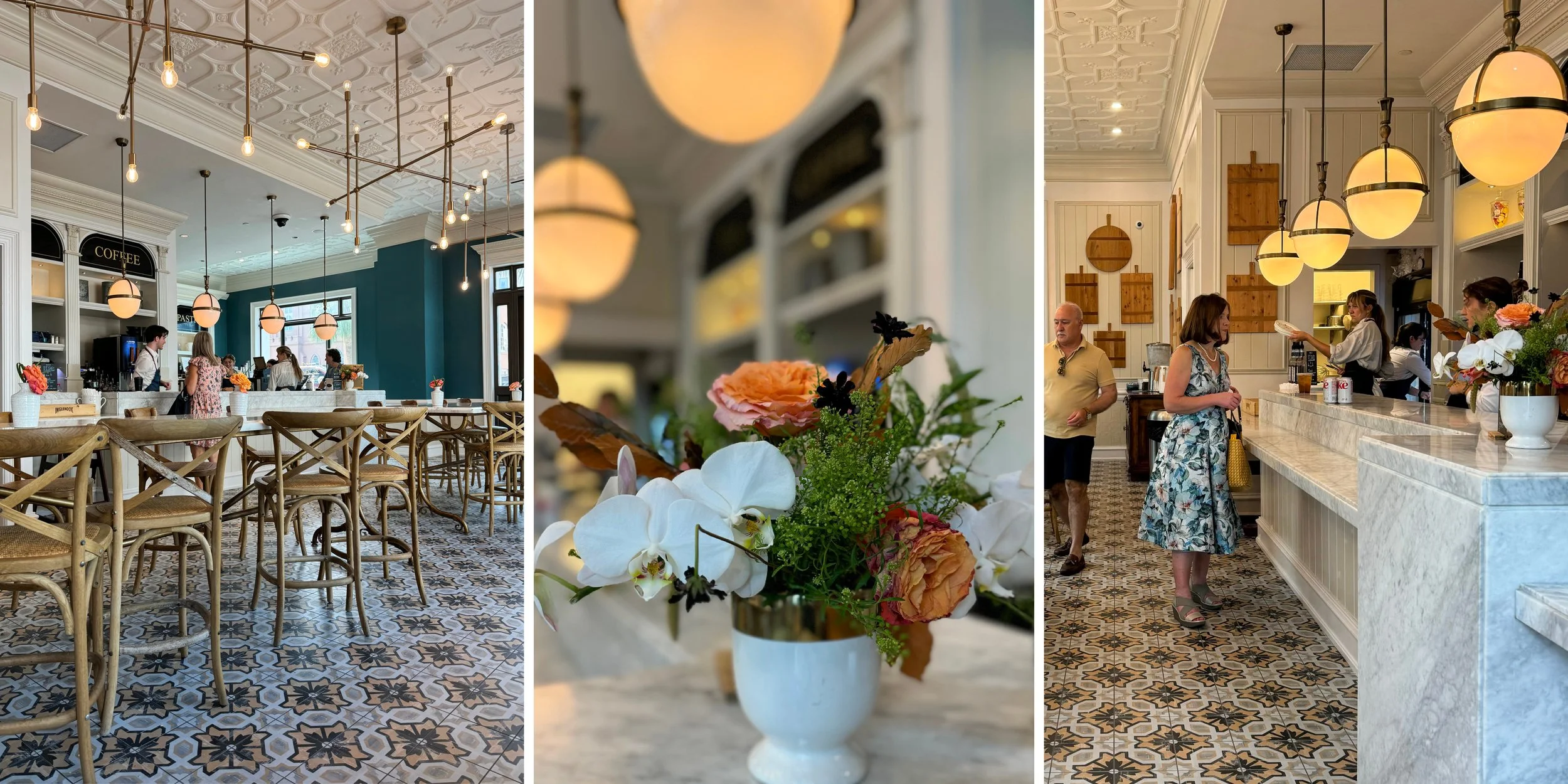
La Patisserie at Hotel Bennett, Charleston SC USA
People often think of interiors in terms of appearance, but they are more than that: atmosphere, comfort, memory, texture, light, acoustics, warmth, proportion and emotional experience.
How often have people commented that they don’t want to go back to a certain restaurant because it was too loud and you couldn’t follow the conversation?
I seem to be particularly sensitive to seat and table proportions. When a tabletop sits too high, it changes the comfort of the entire dining experience.
I once stayed in an Airbnb where the flooring was designed to imitate timber. I understand that real timber flooring is expensive, but walking across a plasticky floor is not the same as experiencing warm timber underfoot. That’s where the expression came from: “You don’t remember the cost, but you remember how it made you feel.”
Atmosphere Is Created Through Small Decisions
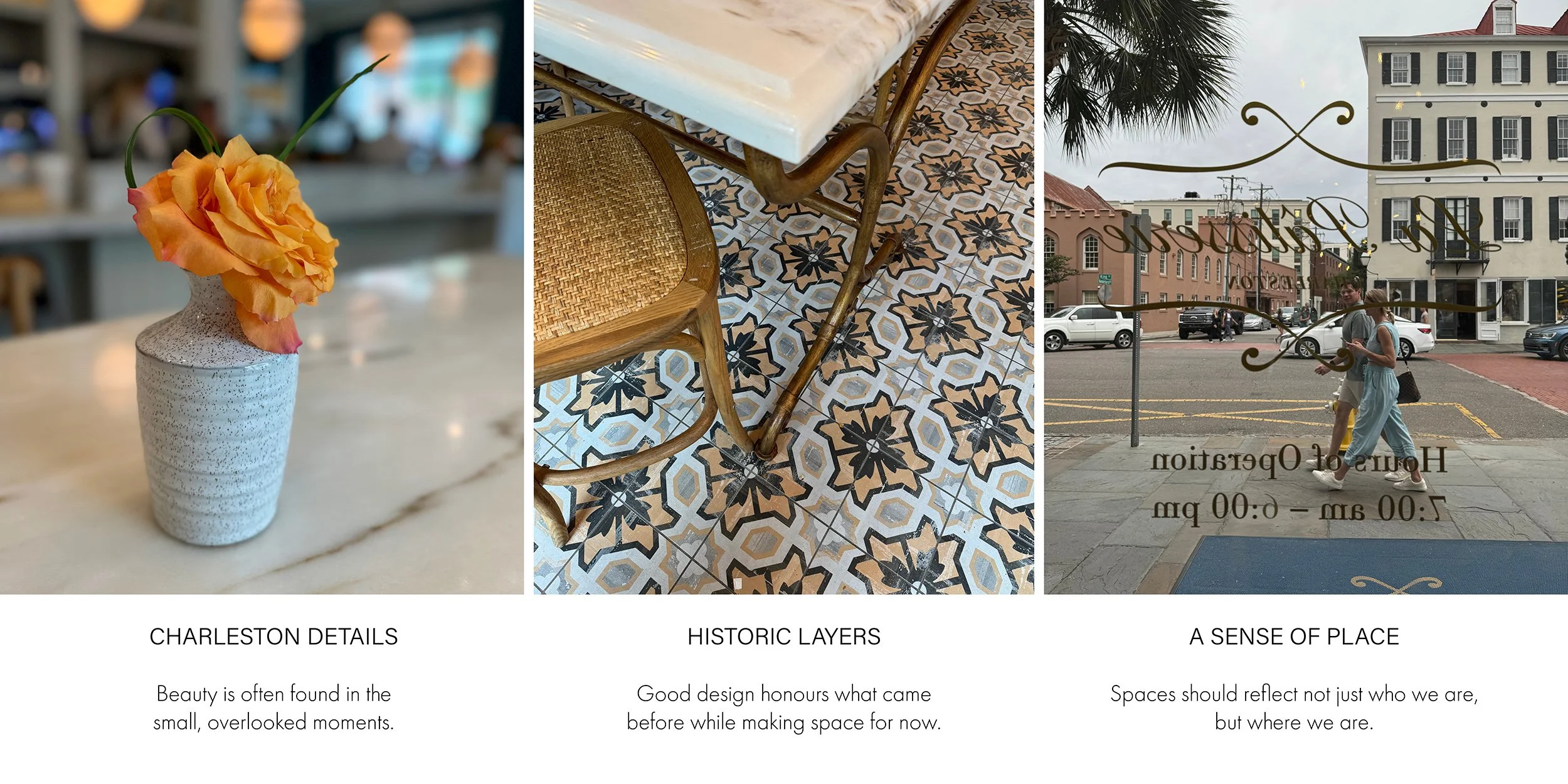
A space I keep coming back to, and that is referenced in the image above, is a beautiful French café I visited in Charleston. The atmosphere was created through many small decisions working together: marble surfaces, detailed flooring, thoughtful lighting and flowers carefully placed on the tables. The simple use of wooden chopping boards also doubled as an acoustic layer, softening the harder surfaces.
But what stayed with me wasn’t simply the appearance of the room.
It was the feeling of sitting there slowly drinking Southern iced tea, watching people come and go, noticing how dressed-up everyone seemed, and feeling completely immersed in the atmosphere of the space.
The spaces that feel the most resolved are the ones where everything works into the same thread.
Comfort Comes From Layering
Spaces can start to feel cold when they become overly polished or one-note. I often notice this in interiors that rely heavily on glossy finishes — glossy floors, cabinetry and glass surfaces everywhere.Visually, they may appear sleek in photographs, but emotionally they can feel hard and uncomfortable to inhabit.
Comfort often comes from variation, softness and layering.
When someone loves a particular colour, they sometimes instinctively apply it everywhere in the exact same way. But spaces tend to feel richer when colours are layered tonally instead — woven through textures, materials and complementary finishes so the room develops depth and rhythm rather than feeling flat.
Real Spaces Are Experienced in Three Dimensions
This is where atmosphere starts to emerge — and atmosphere isn’t fully experienced through imagery alone.
Real spaces are experienced in three dimensions. You move through them. You notice changing sight lines, shifts in light throughout the day, texture underfoot, softness in materials, acoustics, warmth and scale.
The Need for Sanctuary
People aren’t looking for more stimulation; they are looking for relief — spaces that feel calm, grounded and emotionally supportive, whether at home or out in the world.
I often return to the word sanctuary when thinking about interiors. Whether it’s a home, café, waiting room or hotel lobby, people want to feel comfortable in the spaces they occupy. They want spaces that allow them to exhale a little — spaces that feel calm, connected and safe.
That feeling rarely comes from expensive finishes or trend-driven styling alone. More often, it comes from thoughtful layering, cohesion, restraint and understanding how people actually want to live within a space.
Maybe that’s why certain spaces stay with us for years afterward. Not because they were perfect, expensive or trend-driven, but because they made us feel something: comfortable, calm and understood.
© Donna Vercoe. All rights reserved. Images, including CAD drawings, Nikon DSLR, and iPhone photographs, are the property of Donna Vercoe.