Preparing a Home for Sale | Strategic Updates That Make a Difference
Styling your home for sale is about stepping back from how you live in it, and resolving the space for how it will be seen — clear, balanced, and considered.
It’s less about adding more, and more about editing — refining layout, simplifying what’s visible, and allowing the space to read clearly, both in person and online.

Lounge and dining area
Preparing a home for sale isn’t about styling for the sake of it.
It’s about knowing where to focus — what to update, what to leave, and how to present the space so buyers understand it immediately.
The goal isn’t to spend more. It’s to spend well.
So where does that investment actually go?
What already works — and can be left alone?
Where is the space asking for less, not more?
What will a buyer notice first — and what will they question?
In this case, the foundations were already there. The bones of the home were strong, and many of the existing furniture pieces worked well within the space. Rather than replacing everything, the approach was to recognise what didn’t need to change — and focus only on what would make a meaningful difference.
Sometimes, that clarity is already built into the space — shaped by earlier design decisions. (A good example of this is explored in a Storage Savvy Boys Bedroom, where joinery and layout were refined to better support the space prior to the client deciding to sell.)
Start with What Costs Nothing
Before adding anything, the first step was editing.
Clutter was the main issue — everyday items, toys, books and personal objects that made the space feel like someone else’s home, rather than a place a buyer could step into mentally.
By removing and simplifying, the layout became clearer.
The space felt calmer, more open, and easier to read.
This is often the most impactful shift — and it costs nothing.
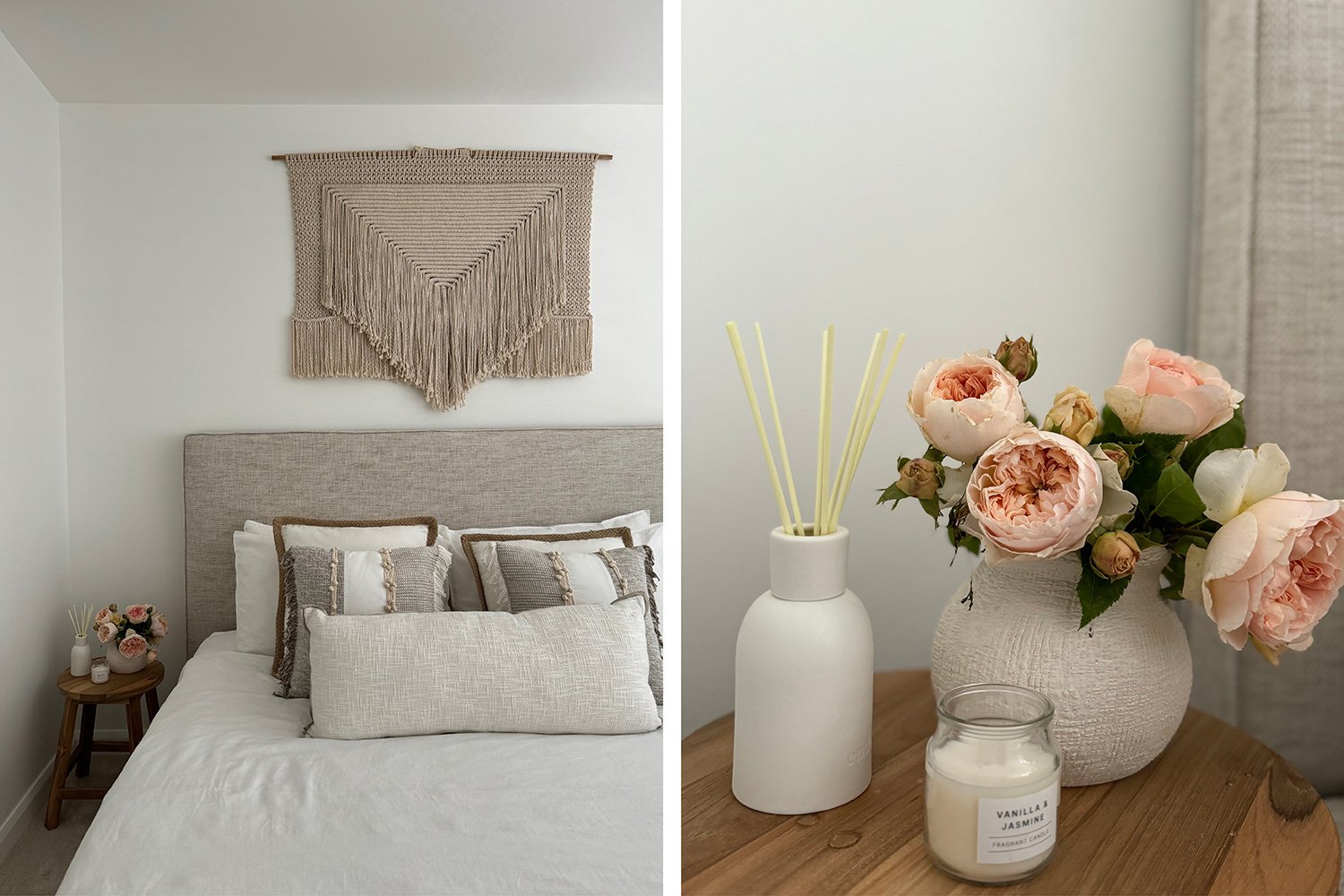
Principal bedroom
Work With What’s Already There
Not every home requires new furniture or a full reset.
Here, the larger furniture pieces were retained. They were already considered and appropriate to the space, and replacing them wouldn’t have added value.
There were also practical considerations. The home was being lived in during the sales campaign, within an apartment building — which made a full staging install unnecessary, and potentially disruptive.
Instead, the focus was on working with what existed, and refining it.

Floral arrangements
Where the Money Went
Spending was selective.
A small number of new pieces were introduced — items that would carry forward into the next home, rather than being purely for sale. Soft furnishings were layered in through hired cushions and throws, adding warmth without long-term commitment.
Plants were brought in to soften the space, and fresh flowers were used for photography and open inspections — a small detail, but one that subtly lifts the overall impression.
These decisions weren’t about adding more.
They were about reinforcing what was already working.
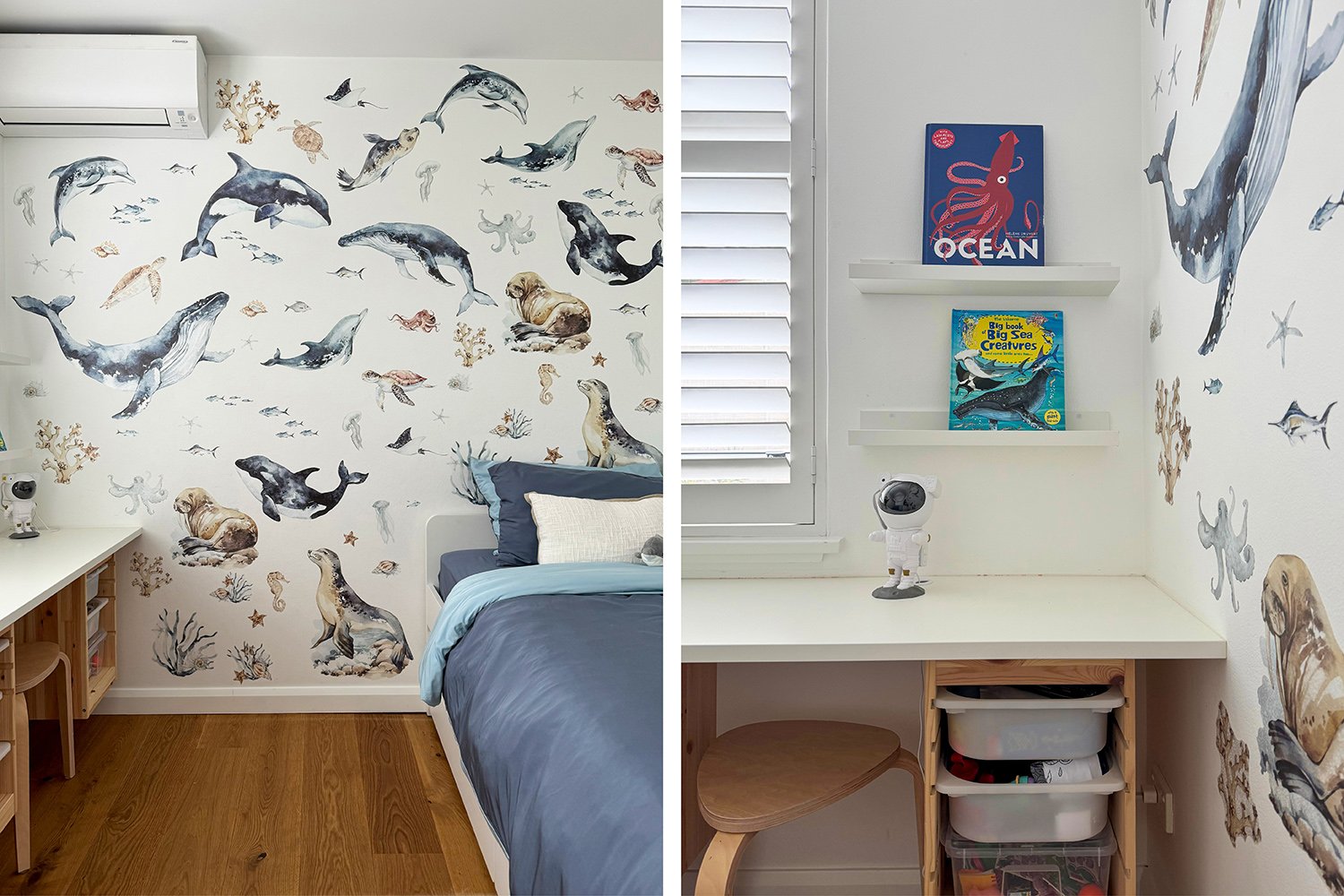
Bedroom 1
What Changed
Before, the space felt busy and personal.
After, it felt calm, cohesive, and move-in ready.
This same approach applies in other contexts — including short-term accommodation, where spaces need to read clearly and connect quickly. (A similar line of thinking is explored in Vacation Rental Design.)
The shift wasn’t dramatic — but it was clear.
Where a buyer may have previously focused on the fact that it was someone else’s living space, they were now able to see past that — and begin to imagine their own life there.
A Considered Approach
With a tight time-frame and a clear goal to bring the property to market at the right moment, decisions needed to be focused.
Constraints, in this case, were useful. They removed the temptation to overwork the space, and kept attention on what would actually make a difference.
Preparing a home for sale doesn’t require starting again.
More often, it’s about recognising what’s already there — and making a series of considered decisions to support it.

Bedroom 2

What the spaces looked like before
© Donna Vercoe. All rights reserved. Images, including CAD drawings, Nikon DSLR, and iPhone photographs, are the property of Donna Vercoe.