It’s All in the Edit
AI, Interior Design and Professional Judgement
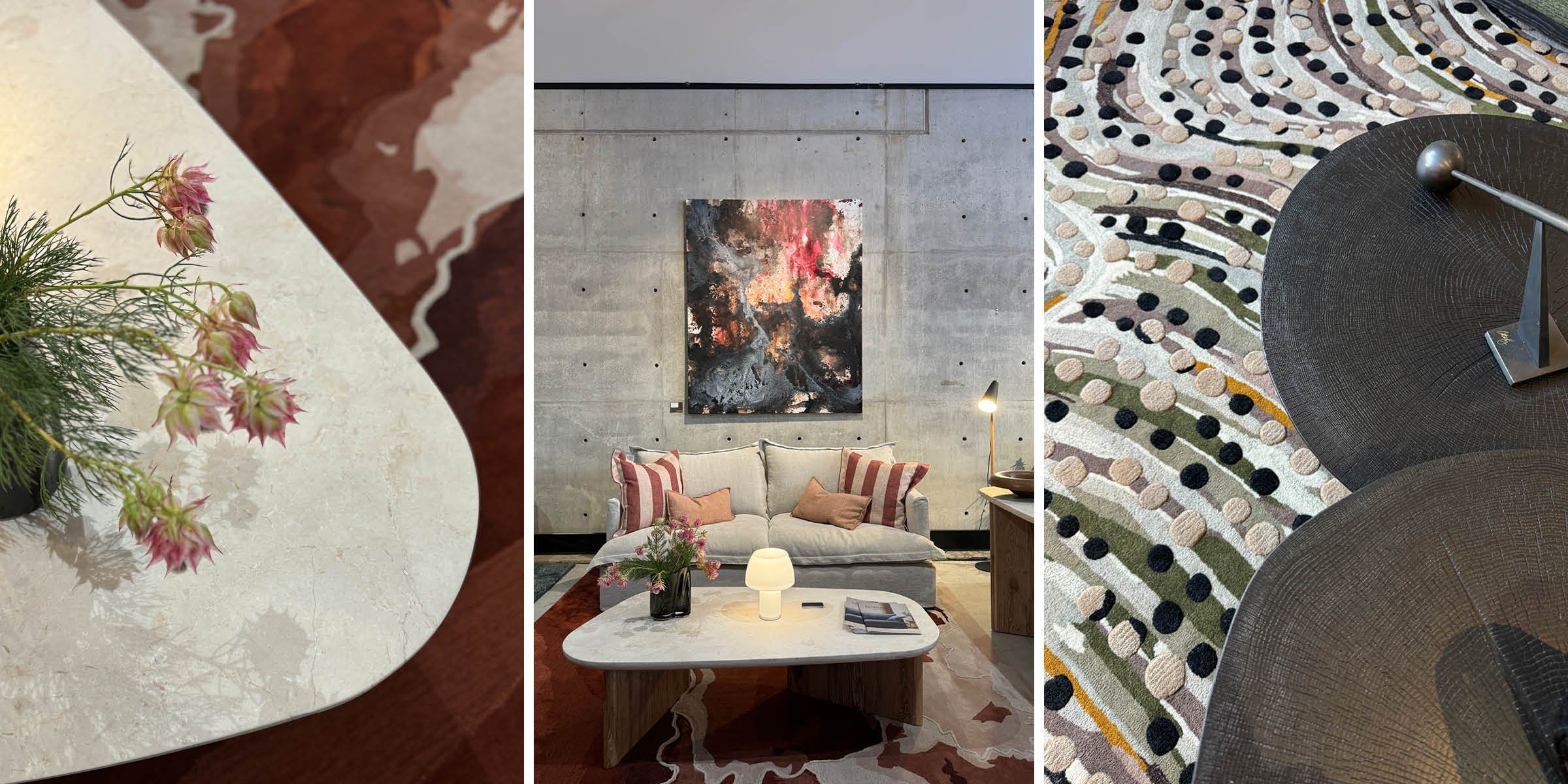
From a recent Molmic event in Sydney, rugs by Tappeti
I love sitting down with a cup of tea and a stack of interior magazines (thanks to the Double Bay Library book fair for keeping me well stocked) to go through design ideas and add to my supplier list.
I was thinking about how much I appreciate design magazines, as it’s all in the edit. By “the edit”, I mean the layers of consideration behind what makes it onto the page: quality, colour, materiality, functionality and cohesion. What looks effortless is backed by an experienced eye and countless decisions about what belongs — and what doesn’t.
It got me thinking about a post I’d read recently suggesting you could give AI the room you want to design and let it do the rest — right down to the shopping list. Search results and algorithmic recommendations aren’t the same thing as professional curation. Something appearing prominently online doesn’t necessarily tell you about its quality, suitability, longevity or how it will function within a particular space.
As a designer, I have spent my career attending trade shows and showrooms, building relationships with suppliers, asking questions and developing my product knowledge. Much of that knowledge comes through conversation. Suppliers are specialists in their products, and not everything I need to know is available on a website. I regularly ask about construction, dimensions, performance, fire ratings, care requirements, stock, manufacturing and lead times. Over time, all that information becomes part of my own knowledge base.
Those relationships matter too. I have people I can call — sales reps and suppliers who know their products intimately and can answer questions, suggest alternatives or help solve a problem.
Designing for a physical space also requires information that can't be captured by the basic room dimensions: ceiling heights, windows, power points, skirting boards, existing conditions and all the little details that can determine whether a design works. Understanding how the client uses that space comes from asking questions as well.
I don’t need to know everything myself. Part of my professional judgement is knowing what questions need to be asked, when I need more information, and when to bring in specialist expertise.
I’m not opposed to AI. It’s quite the opposite. I’ve been using it increasingly as a production assistant, a project brain and a reflective advisor. But the judgement remains mine.
I had two back-to-back emails last week that said, “Thank you for supporting Australian design.” It was a lovely reminder of how much that matters to me and my business.
At the events I’ve attended recently, I’ve been reminded how much incredible design is happening here in Australia. It was one of the things that drew me to working here in the first place.
I’m particularly drawn to the way Australian designers respond to our landscape, light, colour and materials, creating pieces that feel uniquely at home in our interiors.
Supporting these designers also means supporting local jobs, manufacturing skills, small businesses and a creative community I’m proud to be part of. I love being able to introduce clients to the people and stories behind the products, and to a whole world of design beyond the standard big-box showrooms.
AI gives us access to an extraordinary amount of information, and I’m excited by what it can do. But access to information isn’t the same as knowing what to do with it. That still requires experience, context and judgement. It still requires an edit.
AI, to me, is another tool in my toolbox, along with AutoCAD, InDesign, Photoshop and my beloved magazines.
Full transparency: I’ve used AI in writing this blog post. I start old school with pen to paper, dictate into AI to create the digital copy, then use it to help me edit and refine my writing before I post.