Before You Renovate, Start with a Plan
Not sure where to begin? A Design Consultation or a 10-Hour Design Block can help you explore what’s possible, identify priorities and establish a direction before committing to major expenditure.
Maybe you know your home isn’t working, but you’re unsure what to change or how much it might cost. You might be waiting until you have more money saved before making changes to your home.
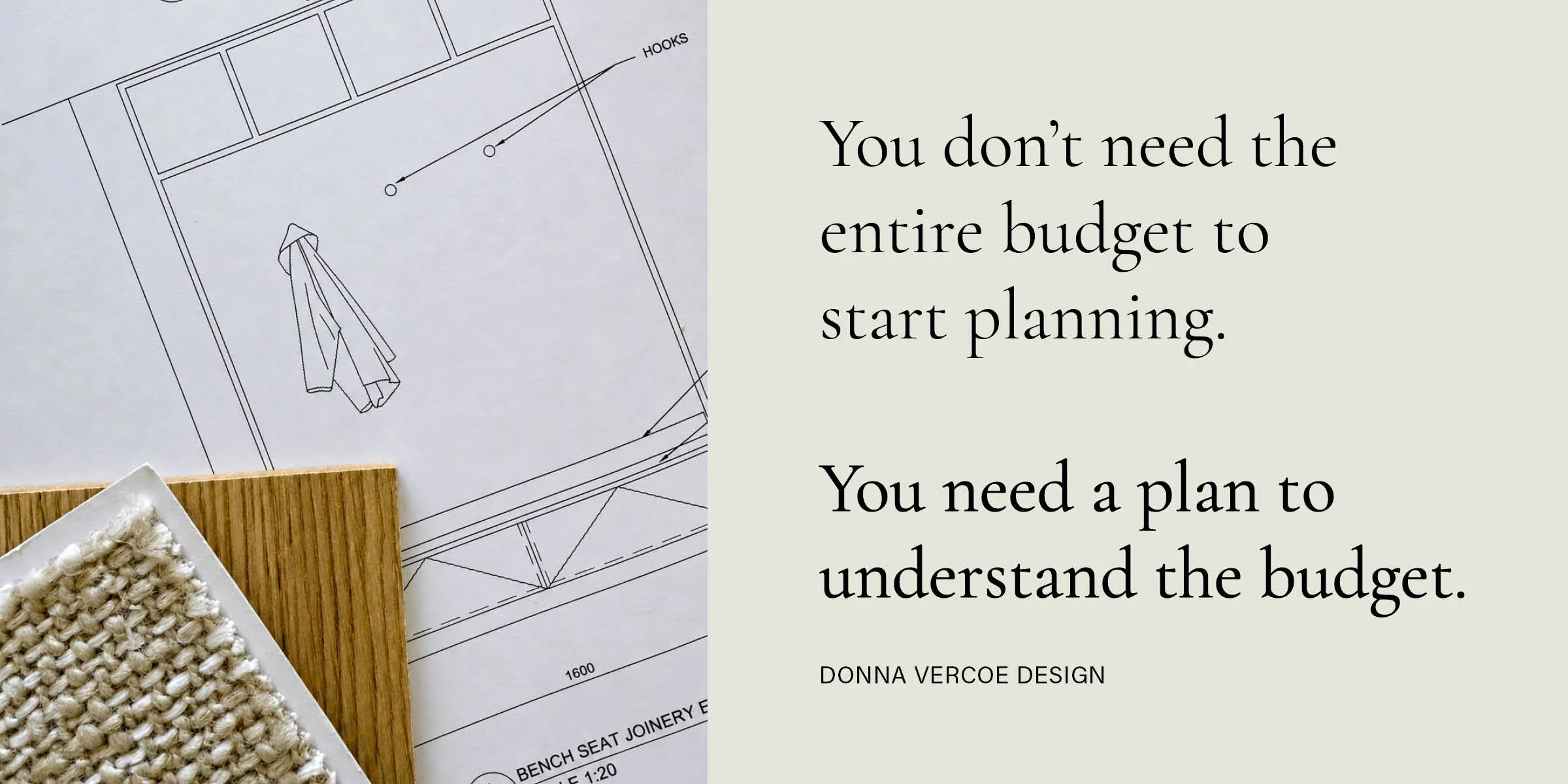
But you don’t need the entire budget to start planning. You need a plan to understand the budget.
Good planning helps manage three things: money, time and expectations. It gives you a clearer idea of what your budget could cover, how long things might take and what can realistically happen at each stage.
Get the floor plan working first
Start by writing down your thoughts. What’s working? What isn’t? What are you trying to achieve? Then look at the floor plan. Circulation is a huge part of design, but it often gets overlooked when people are trying to fit as much furniture into a space as possible. That 1000 mm deep sofa you have your eye on may be gorgeous, but if it fills the room without leaving space to move around, it’s better to know at the design stage than when it’s delivered.
Working through the layout helps you get those purchases right.
A clearer plan, a clearer budget
Putting a plan together allows us to obtain preliminary pricing based on what you actually want to do. This gives you a better understanding of likely project costs, helping you decide where to spend, what to prioritise and what can happen in stages.
Work out where to spend
I like to resolve the major elements early: flooring, joinery and larger furniture pieces. Joinery can do the heavy lifting for function and storage, potentially avoiding the need to buy additional furniture later. Once you know the sofa works in the layout, choosing it early also means you can select other pieces around it.
Without that overall direction, it’s easy to overspend in one area and leave too little for something else, or make individual purchases that don’t quite come together.
Give yourself time
Planning early means you can factor in furniture lead times and trades’ availability. Your preferred joiner or builder may have a backlog of work ahead of yours.
Case study: Allowing time for the unknowns
On a current project, we were initially pushing to complete the work before Christmas. However, we won’t know the condition of the underlying structure or how much work is needed until the surface material is removed.
The decision was made to begin construction in the new year, avoiding the risk of leaving the project under scaffolding and tarps over Christmas. The furniture’s 18–22 week lead time has also been factored in, with delivery anticipated around the completion of construction.
Working through these details during planning helped establish a more realistic programme, giving clients a clearer understanding of the timing and the uncertainties involved.
You don’t have to do everything at once
An overall plan gives you something to work towards, even if the improvements happen over several years. You can consider which work needs to happen first, what preparation is needed for later stages, and how the materials and finishes will work together. That helps avoid redoing work and keeps the result cohesive. The aim is to make decisions today that support what you want to achieve tomorrow.
Because getting it right on paper is usually far less expensive than getting it wrong on site.